
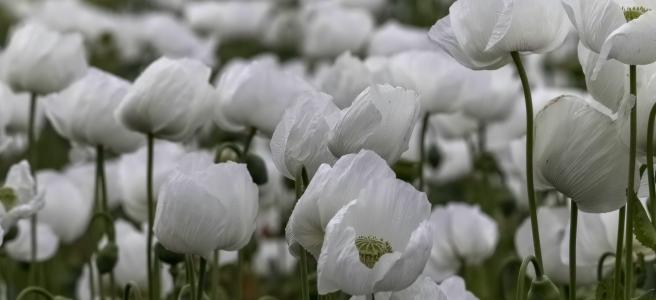
As a vicar, I am sometimes asked why I choose to wear a white poppy on Remembrance Sunday. It is a fair question, and one I am happy to answer.
First, I want to be clear that for me wearing a white poppy is not a rejection of the red poppy, or of the remembrance of those who have served and died in war. The Royal British Legion, of which I am a member, does important work and the red poppy holds significant meaning for many people. Remembering those from this country who have given their lives, and supporting those who have served and their families, matters enormously and I choose to wear a red poppy alongside my white one.
For me, the white poppy offers another dimension to that remembrance.
It has three central associations: remembering all victims of war, including civilians and people of every nationality; challenging the idea that war should be glorified; and committing ourselves to working for peace. These are not, in my view, incompatible with remembering those who have served in the armed forces. They are different ways of responding to the same human reality: that war brings immense suffering and loss.
I wear a white poppy because I believe remembrance should look both backwards and forwards. We remember those who died on all sides, acknowledge the suffering of those who survived, and ask what we might do to prevent future generations experiencing the same losses. Remembering the dead should surely include a commitment to making fewer people dead in future conflicts.
As a Christian, this has a particular significance for me. Jesus speaks of the blessing of peacemakers, and the Bible repeatedly holds before us a vision of a world where weapons are no longer needed: where swords are beaten into ploughshares and nations learn war no more. This is not a naïve belief that peace is easily achieved, or that negotiation will always succeed. It is an aspiration that should shape our thinking, our choices and our actions.
I serve as a priest in the Diocese of Coventry, whose story puts reconciliation at the heart of our Christian calling. Reconciliation is about more than simply ending disagreements or avoiding conflict; it is about the difficult and ongoing work of building relationships, understanding difference, seeking justice and finding ways to live together. For me, working for peace is an essential part of that calling. It means asking not only how conflicts might be resolved, but how we might address the divisions, injustices and failures of understanding that so often lie behind them.
I recognise that people have different views about the role of military force, defence spending and the circumstances in which armed intervention may be necessary. Wearing a white poppy does not require everyone to share my views on those questions. Nor does it mean that I have simple answers to the difficult moral choices that war presents.
I also believe that people should be free to make their own choice about how they remember. The freedom to wear a red, white or purple poppy, or indeed no poppy, is part of the freedom of conscience and expression that we should respect in one another. That freedom should work both ways. Wearing a white poppy is not a criticism of someone who wears a red one, just as wearing a red poppy should not be used to question the motives or convictions of someone who wears white.
My white poppy is not intended to compete with the red one, or to diminish anyone else’s act of remembrance. It is simply an expression of my conviction that remembering those who died and working for a more peaceful world belong together.
On Remembrance Sunday, I want to remember. I also want to hope, and to commit myself to the work of peace.

